
Soul AI: How Artificial Intelligence Is Learning to Understand Human Emotion
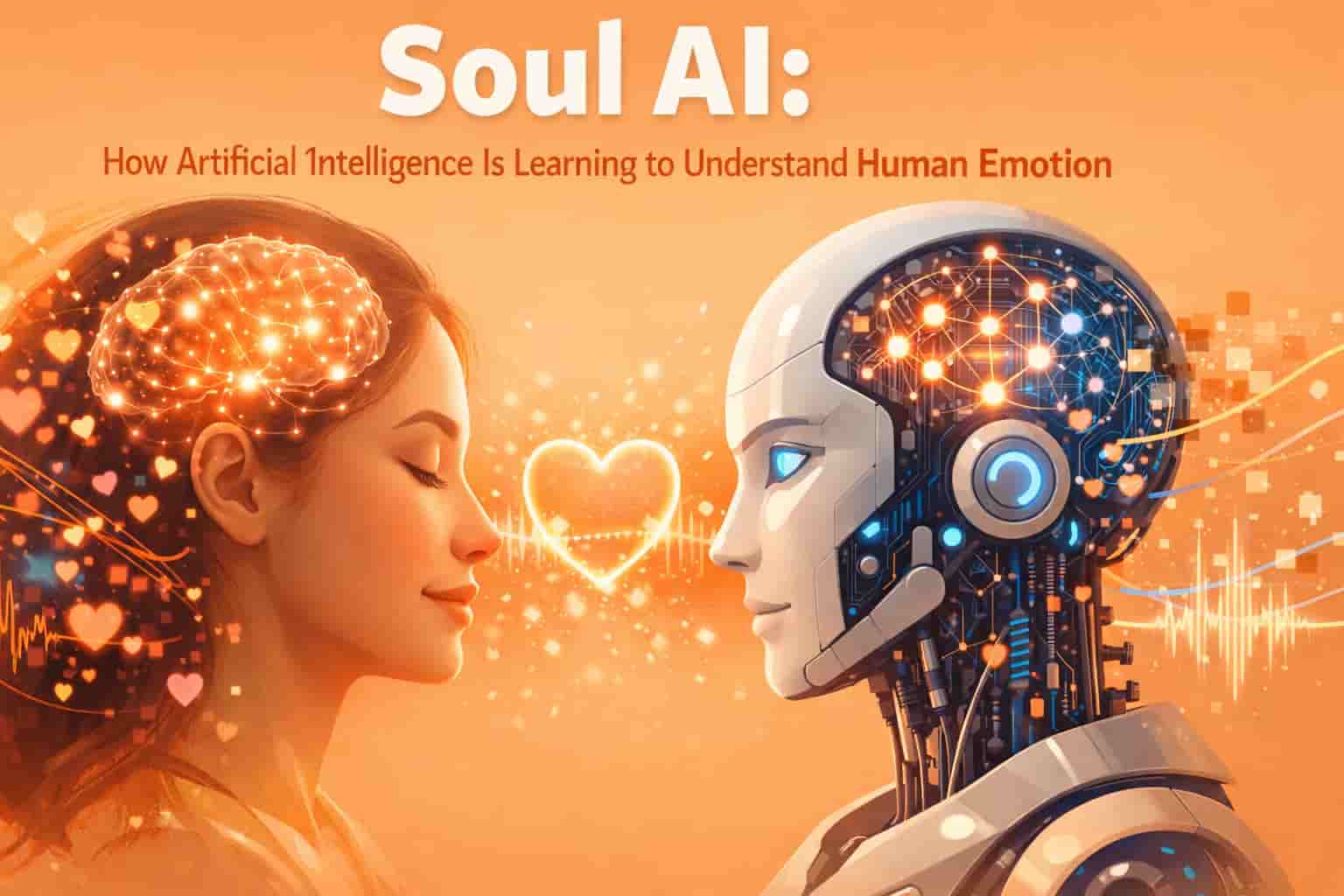
The Soul AI is emerging. AI is now just not about speed, automation, and data manipulation but is about the development of emotional intelligence, models for being self-aware as well as for interacting like humans. Well, for this very reason, today Soul AI is so relevant.
Soul AI advances novel ways for conversing with machines that offer something meaningful in such desperate times.
What is Soul AI and why is it the discussions suddenly occurring about it?
Soul AI at its very heart refers to the emotionally intelligent AI systems that are now designed to be able to understand human emotions, context, and intent, not just commands. Unlike traditional AI, which adheres to a rigid logic, Soul AI blends human-like AI conversations, emotional cues, and behavioral patterns together to make interactions feel more natural.
Looking at what the competition has there now, it is greatest in terms of discussions about emotional considerations, ethical AI, and real-world applications. What virtually all of them fail to address is why users should be interested. The fact is, at its core and scarily simply, Soul AI is designed to try to make technology feel less like a machine and more like a human.
One AI researcher by the name of Daniel Hartman can be quoted as saying, “The future of AI is not smarter machines, but more empathetic ones.”
How does Soul AI work with emotional intelligence and machine learning?
Soul AI has an amalgamation of machine learning, NLP, and sentiment analysis to interpret people’s tone, mood, and intention. Instead of answering questions, it mirrors itself according to the emotional context. To illustrate, if a person sounds pressured, the response is calmer or more reminiscing.
This method is very close to AI emotional intelligence, involving multiple fastest-moving secondary keywords on which opponents rank. It assists the systems in ‘learning’ or detecting emotional patterns in time to improve their responses with every interaction.
This is another development in the same vein dealt with in an article concerning AI-driven personalization trends. Machines, instead of following static rules, receive data that helps them determine the next steps. Would Soul AI then demonstrate authentic affection or feign one once in possession of the necessary information?
The rightful answer is a vehement “no”. While AI from daemons does not have emotions, it can intelligently fake them. This situation is crucial. The objective is not to create sapient beings, but AI systems that will simulate emotions and a capacity for empathy.
It is this confusion that competitors making both sentient being type efforts blur the context. AI is supposed to do findings in reading the emotional signals and responding accordingly. Think of it as a pattern-based emotional judgment rather than a real feeling.
What and where is Soul AI practically employed these days?
This is not bullshit anymore. It is already revolutionizing numerous industries with “emotionally intelligent” tools and AI companions.
Bots of customer support now sense frustration and escalate faster. Mental wellness apps use AI techniques to support responses. Even the content platforms are trying human-like AI opera-tions in their conversations to drive engagement.
For anyone who would like to companionably explore the evolving era of conversational systems, our analysis on the new AI chatbots explains the following.
What differentiates Soul AI from traditional AI?
Traditional AI centers on logic and efficiency. Soul AI, on the other hand, focuses on connection. That point also stands out, attracting followers and attention.
The Soul AI systems are trained not merely on data, but context, emotion, and nuance. Their interactions seem smoother, less robotic, and more relatable. In terms of SEO, this shift follows the way users prefer conversational search results over keyword-packed answers.
Another insight from an external source indicated that emotionally adept AI improves trust and engagement on digital platforms, again underlining their importance.
Are Soul AI ethically right in the long term?
This is an important question to discuss. When we think of self-aware AI, we must also consider the responsibilities competitors touch on ethics but rarely tread deeper. Therefore, Soul AI must remain transparent, unbiased, and have very rigid boundaries.
A code of ethics must be put in place to prevent emotional manipulation or crutches for the very high emotional interactive capacity in virtually human AI. Soul AI will responsibly create richness of experience and preserve human connections instead of simply replacing them.
One take on it is offered by another industry expert: “Empathy in AI should support humans, not substitute them.”
Soul AI could mold the connection between humans and AI for the future.
Soul AI will redefine work, learning, and healing as the years roll by. The potential, unrealized, remains greatly vast from learning platforms that adjust to the student’s emotions to therapy tools supporting recovery.
The distinguishing factor, which puts good players against the rest, is the ability to concentrate on lifetime value. The Soul AI isn’t a trend; it’s a movement towards more genuine digital interactions.
Soul AI FAQs
Is Soul AI the same as artificial intelligence?
Not exactly. Soul AI is the embodiment of artificial intelligence concerning understanding emotions and almost human-like interactions.
Can Soul AI replace feelings?
Unfortunately, no. It just simulates emotions but doesn’t have them.
Is Soul AI safe to operate?
Ethical and transparent implementations render Soul AI safe and a good investment in general.
Where is the field of Soul AI most commonly used?
Customer client servicing, mental wellness applications, and chatbots would be the main users.
Can Soul AI ever become self-aware in the future?
Currently, the capabilities of the technology do not include self-awareness, just simulations.
Conclusion
Soul AI empowers machines to enhance their listening abilities, to be more responsive and human in nature. Their continued survival in any one of the above scenarios is taken for granted.
Drop your thoughts, create your queries, and work with Soul AI and leave some comments below to share this article with fellow tech enthusiasts.
